Focus Lesson: In this beginner-friendly guide to SEO for beginners, you will learn exactly how search engines work and how to rank your website step-by-step.
If you own a website, blog, online store, or business page, chances are you want people to find you on Google. But simply having a website does not mean people will see it. This is where Search Engine Optimization (SEO) comes in.
In simple terms, SEO helps your website appear when people search for things related to what you offer. When done correctly, SEO brings free, consistent traffic from search engines without paying for ads.
From my personal experience working on blogs, business websites, and niche sites, I have seen how proper SEO can take a website from zero visibility to steady organic traffic. I have also made mistakes, learned from Google updates, and adjusted strategies based on what actually works in real life; not just theory.
This guide is written to help beginners understand SEO, apply it correctly, and avoid common mistakes that waste time and money.
What Is SEO and How Does It Work?
Search Engine Optimization (SEO) is the process of improving your website so that search engines like Google can:
- Understand what your content is about
- Trust your website
- Show your pages to the right people
When someone types a question into Google, Google’s goal is to show the most helpful and relevant answer. SEO helps your website become one of those answers.
From experience, websites that focus on helping real users consistently perform better than those trying to manipulate search engines. SEO works best when people come first.
How Google Works
Google uses automated programs called crawlers (or bots) to scan the internet. These bots:
- Visit web pages (crawling)
- Store information about them (indexing)
- Decide which pages deserve higher positions (ranking)
Google looks at many signals, including:
- Content relevance and usefulness
- Page experience and usability
- Website speed
- Mobile friendliness
- Website credibility and trust
Based on real-world testing, content quality and user experience consistently outweigh shortcuts or outdated SEO tricks. Click to Read more on how google search work here
Understanding Search Intent
Search intent means the reason behind a search query. There are three main types:
- Informational – The user wants to learn (e.g., “What is SEO?”)
- Commercial – The user wants to compare options (e.g., “Best SEO tools”)
- Transactional – The user wants to take action (e.g., “Buy SEO services”)
This article is designed to satisfy informational search intent. The goal is to educate clearly, not sell aggressively. Search engines reward content that fully answers user questions without confusion.
Keyword Research for SEO Beginners: How People Find Your Website
Keywords are the words and phrases people type into search engines. When I first started learning SEO, I made the mistake of targeting very competitive keywords. Results were slow and frustrating. Once I focused on long‑tail keywords more specific phrases, traffic began to grow steadily.
Examples
- Too broad: “SEO”
- Better: “SEO for beginners”
- Best: “How SEO works for small businesses”
Beginner‑Friendly Keyword Tips
- Use Google autocomplete suggestions
- Check the “People Also Ask” section
- Think about real questions your audience asks
- Choose keywords you realistically have a chance to rank for
On‑Page SEO for Beginners: Making Your Pages Clear and Helpful
On‑page SEO focuses on optimizing individual pages.
Key Elements
- Title Tags: Your title should clearly describe the page and include your main keyword naturally.
- Meta Descriptions: These summaries encourage users to click. They should be clear, honest, and helpful.
- Headings (H1, H2, H3): Headings organize your content and improve readability. Clear structure helps both users and search engines.
- Internal Links: Linking to related content on your site helps visitors explore more and improves SEO.
Based on experience, pages with clean structure and logical flow perform better over time.
Content Quality: The Core of Successful SEO
Content is the foundation of SEO. Search engines prioritize content that:
- Is original and useful
- Answers questions clearly
- Demonstrates experience and knowledge
- Is easy to read and understand
Over time, longer, well‑explained articles written for beginners consistently outperformed shorter, shallow content on my websites.
Technical SEO Basics
Technical SEO ensures search engines can access and understand your website. You don’t need to be a developer to handle the basics:
- Mobile‑friendly design
- Fast loading pages
- Secure HTTPS connection
- Clean, readable URLs
From experience, mobile optimization is essential, especially where most users browse on smartphones.
Off‑Page SEO Explained: Building Trust Beyond Your Website
Off‑page SEO focuses on signals outside your website, mainly backlinks. Backlinks are links from other websites to yours. They act as votes of trust.
Early mistakes taught me that low‑quality backlinks can damage rankings. High‑quality, relevant links are far more valuable than large quantities. Focus on:
- Relevant websites
- Genuine mentions
- Helpful guest posts
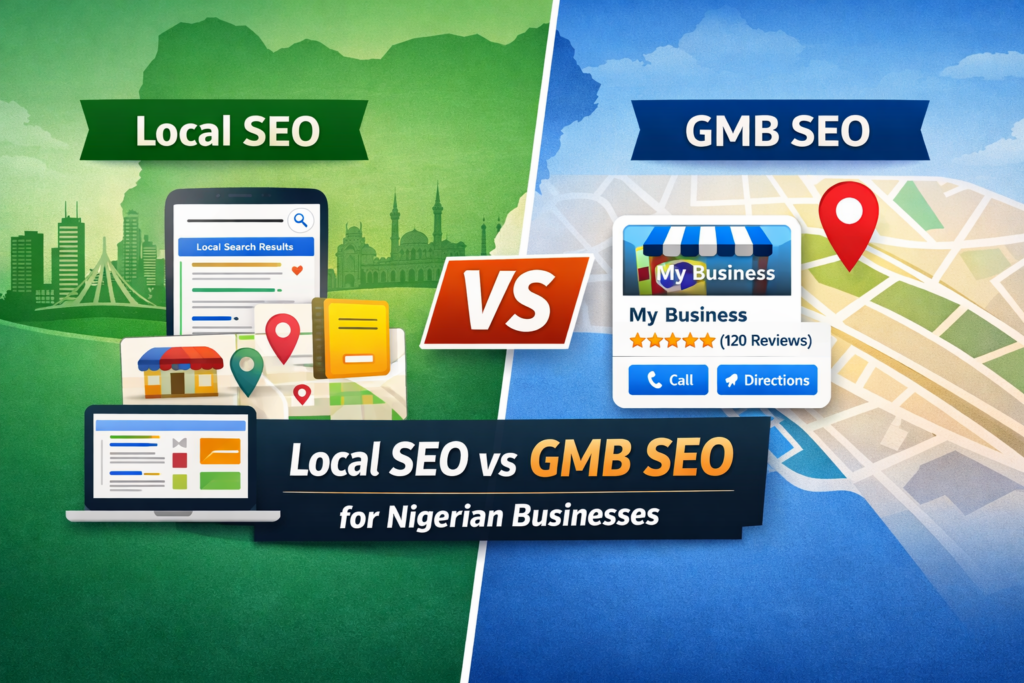
Local SEO: For Businesses Serving Specific Areas
Local SEO helps businesses appear in location‑based searches. Examples:
- “SEO expert in Lagos”
- “Digital marketing services near me”
Key steps include:
- Creating a complete Google Business Profile
- Using consistent business details
- Encouraging genuine customer reviews
Local SEO often delivers faster and more targeted results.
Measuring SEO Performance
SEO should be tracked, not guessed. Key metrics to monitor:
- Organic traffic
- Keyword rankings
- User engagement
- Page performance
Using tools like Google Search Console helped me identify improvement opportunities and fix technical issues early.
Common SEO Mistakes to Avoid
Based on real experience, beginners should avoid:
- Keyword stuffing
- Copying content from other sites
- Ignoring mobile users
- Buying cheap backlinks
- Expecting overnight results
Why SEO Is a Long‑Term Investment
SEO builds trust, authority, and steady traffic. Unlike paid ads, SEO continues working long after content is published. Well‑optimized pages can bring visitors for months or even years with minimal ongoing cost.