Google processes billions of searches every single day. Yet for many people; bloggers, business owners, and even new marketers, how Google actually finds and ranks web pages still feels mysterious.
As an SEO professional and digital marketer, I’ve spent years working with websites that struggled to appear in search results, as well as others that steadily climbed to page one. In almost every case, the difference came down to understanding how Google Search really works.
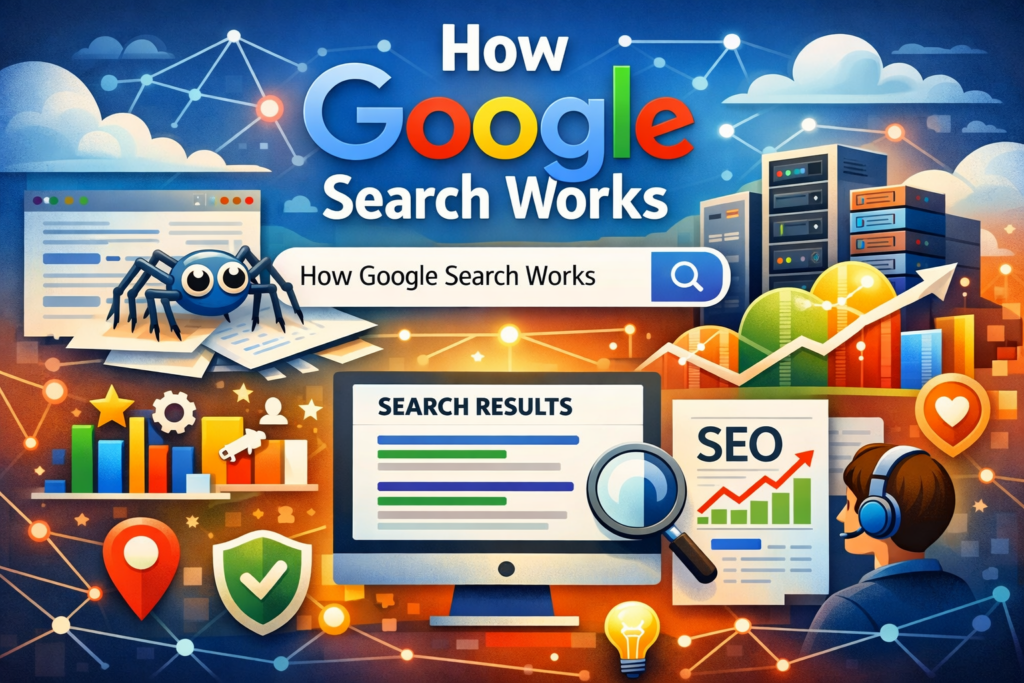
This guide explains Google’s crawling, indexing, and ranking process.
Why Understanding How Google Search Works Matters
Many website owners focus solely on keywords or backlinks, but Google Search is a process, not a single action. If Google can’t find your page, it won’t appear in search results. If it can’t understand your page, it won’t rank well. And if it doesn’t trust your page, it won’t compete effectively.
Understanding how crawling, indexing, and ranking work allows you to create content that Google can access, avoid technical mistakes that block visibility, and build long-term, sustainable search traffic. From my experience in SEO campaigns, even small fixes like improving site structure or clarifying content intent can dramatically improve visibility once these fundamentals are in place.
The Three Main Stages of Google Search
Google Search works in three core steps:
| Stage | Purpose | Quick Explanation |
|---|---|---|
| Crawling | Find pages | Google discovers new and updated pages across the web. |
| Indexing | Understand & store pages | Google analyzes page content and adds it to its searchable index. |
| Ranking | Order search results | Google evaluates relevance and quality to determine how pages appear in results. |
Stage 1: Crawling – How Google Finds Web Pages
What Is Crawling?
Crawling is how Google discovers new and updated content on the internet. Google uses automated programs called Googlebots (also known as crawlers or spiders). These bots:
- Follow links from one page to another
- Discover new pages
- Revisit existing pages to check for updates
Think of crawling like a librarian walking through a massive city, following street signs (links) to find new books (web pages).
How Googlebots Discover Pages
Google primarily finds pages through:
- Internal links
- External links from other websites
- XML sitemaps submitted by site owners
In my work as a digital marketer, I’ve seen new pages remain invisible simply because no other page linked to them. Once internal links were added, Google found them quickly.
What Can Block Crawling?
Some common issues include:
- Broken links
- Pages blocked by robots.txt
- Poor site structure
- Server or speed issues
If Google can’t crawl a page, it cannot appear in search results.
Stage 2: Indexing – How Google Understands and Stores Pages
What Is Indexing?
Indexing is when Google analyzes a page’s content, understands what it’s about, and stores it in its massive database known as the index. If crawling is finding a book, indexing is reading and categorizing it.
What Google Looks at During Indexing
Google evaluates:
- Main content and headings
- Keywords and topic relevance
- Page structure and HTML
- Internal and external links
- Mobile usability and speed
From professional SEO experience, clarity always beats complexity. Pages written for humans are indexed more accurately by Google.
Why Some Pages Are Not Indexed
Pages may not be indexed due to:
- Thin or duplicate content
- Lack of clear intent
- Technical errors
- No unique value
Stage 3: Ranking – How Google Orders Search Results
What Is Ranking?
Ranking determines which indexed pages appear first when someone searches on Google. Google’s goal is simple: show the most helpful, relevant, and trustworthy result.
Key Ranking Factors
While Google uses many signals, the most important include:
- Relevance to the query
- Content quality
- User experience
- Authority and trust
As an SEO professional, I’ve seen smaller websites outperform large brands simply by offering clearer and more helpful answers.
How EEAT Fits Into Google Search
Google emphasizes EEAT:
- Experience
- Expertise
- Authoritativeness
- Trustworthiness
This article reflects real-world SEO experience, industry best practices, and transparent guidance designed to help users; not manipulate algorithms.
Common Myths About Google Search
- Keywords alone guarantee rankings
- More content always means better rankings
- New pages rank instantly
How to Optimize Your Website Based on How Google Works
Practical tips based on SEO experience:
1. Use Clear Internal Linking
Internal linking is a fundamental SEO strategy that helps Google understand your website’s structure and content hierarchy. By linking related pages and posts within your site, you guide both search engines and users to discover more of your content.
Clear internal links also distribute page authority, which can improve rankings for important pages. For example, linking a blog post on “SEO Basics” to a service page on “SEO Audits” signals to Google that the service page is a valuable resource.
From a user perspective, internal linking enhances navigation and keeps visitors engaged longer. Readers are more likely to explore additional content when links are contextually relevant and clearly labeled. To maximize the benefits, avoid generic anchor text like “click here” and use descriptive phrases, such as “learn more about improving website SEO,” which boosts both usability and SEO relevance.
2. Create Intent-Focused Content
Intent-focused content aligns your articles or pages with what users are actively searching for. Understanding search intent; whether informational, navigational, or transactional, ensures your content meets readers’ expectations and improves engagement metrics.
For example, if users search for “how Google crawling works,” your content should explain crawling in detail rather than shifting to unrelated SEO tips. This alignment helps Google rank your page higher for queries that match the intent.
Creating intent-focused content also involves structuring your material to answer questions clearly and provide actionable insights. Use headings, bullet points, and examples to deliver concise, valuable information. By anticipating user questions and providing direct answers, your pages satisfy both search engines and visitors, increasing the likelihood of higher click-through rates and longer dwell time.
3. Optimize for Mobile & Speed
Mobile optimization and page speed are critical ranking factors in today’s SEO sector. Google prioritizes mobile-friendly websites in its indexing, meaning your site must display correctly on all devices. Responsive design, scalable images, and touch-friendly elements ensure that users have a smooth experience, which reduces bounce rates and improves search rankings.
Equally important is site speed. Slow-loading pages frustrate users and can prevent Google from fully crawling and indexing your content. Optimize images, minimize unnecessary scripts, and leverage browser caching to improve load times. A fast, mobile-optimized site not only boosts SEO performance but also enhances user satisfaction, engagement, and conversions.
4. Avoid Thin or Duplicate Content
Thin content refers to pages with little or no original value, while duplicate content appears multiple times across your site or the web. Both can harm SEO because Google prioritizes pages that offer unique, helpful information. Avoid creating content that only briefly touches a topic or repeats what already exists without adding new insights.
To prevent duplication issues, use canonical tags when necessary and consolidate similar content into comprehensive, authoritative pages. Focus on creating well-researched, in-depth articles that address user needs thoroughly. High-quality, unique content builds credibility with both users and search engines, improving your chances of ranking on page one.
5. Be Transparent About Authorship
Google values credibility and trustworthiness, which is why clearly displaying authorship is essential. By including your name, credentials, and a short bio, you signal to both users and search engines that your content is reliable and backed by expertise. This transparency supports EEAT principles (Experience, Expertise, Authority, Trust) and helps establish your authority in the SEO and digital marketing space.
Additionally, authorship transparency improves user trust and engagement. Readers are more likely to share and interact with content when they know who created it. Include links to author profiles or social media, highlight relevant qualifications, and update bios regularly to reinforce authenticity and maintain credibility in the eyes of both Google and your audience.

James Agbai is an SEO Specialist and Content Strategist with over five years of experience helping businesses, bloggers, startups, and service providers improve their online visibility through ethical, data-driven SEO. He specializes in technical SEO, content strategy, keyword research, and on-page optimization, with a focus on building sustainable organic growth rather than relying on short-term tactics.